 208 Manhattan St. Auburndale, FL 33823.
 Shopping Cart




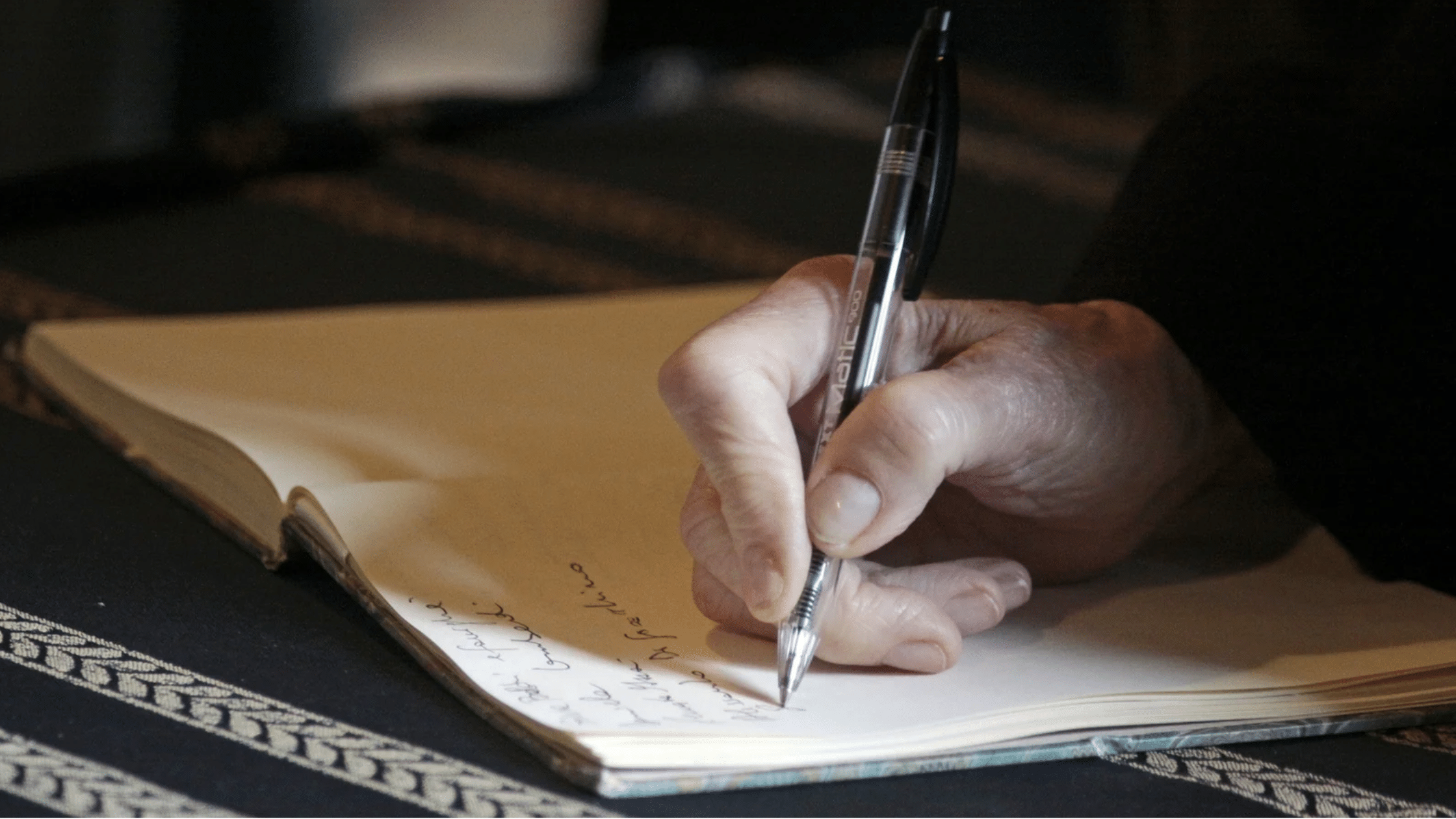
When someone close to you dies, finding the right words to speak about their life may not come easily. As you prepare your tribute, certain moments from your loved one’s life may come to mind, but deciding how to include them can be difficult. Certain memories may come to mind, such as the way they welcomed visitors, the stories they enjoyed telling, or the time you spent together.
Writing a eulogy allows you to bring a few of these moments into your farewell. Rather than telling their entire life story, you can focus on the experiences and personal qualities that show what they meant to you.
In this guide, you’ll learn five straightforward steps for preparing a eulogy. It also includes eight ways to begin your speech, examples for different relationships and practical advice to help you prepare for speaking at a funeral or memorial service.
How Long Should a Eulogy Be?
Most eulogies take around 3–5 minutes to deliver, but there is no rule about how long yours should be. This usually allows enough time to introduce yourself, talk about the person you are remembering and share a few moments from their life.
The time available may depend on how the funeral or memorial service is arranged. When several people are giving tributes, each person may have a shorter time to speak. If you have more time, you can include another story or reflect on something important the person taught you.
While preparing your speech, choose a few personal details that show what made your loved one special to you. You do not have to cover every stage of their life. Include personal touches that capture your loved one’s character. Then practise saying your tribute out loud to check whether it stays within your allotted speaking time.
A Simple Five-Part Eulogy Structure
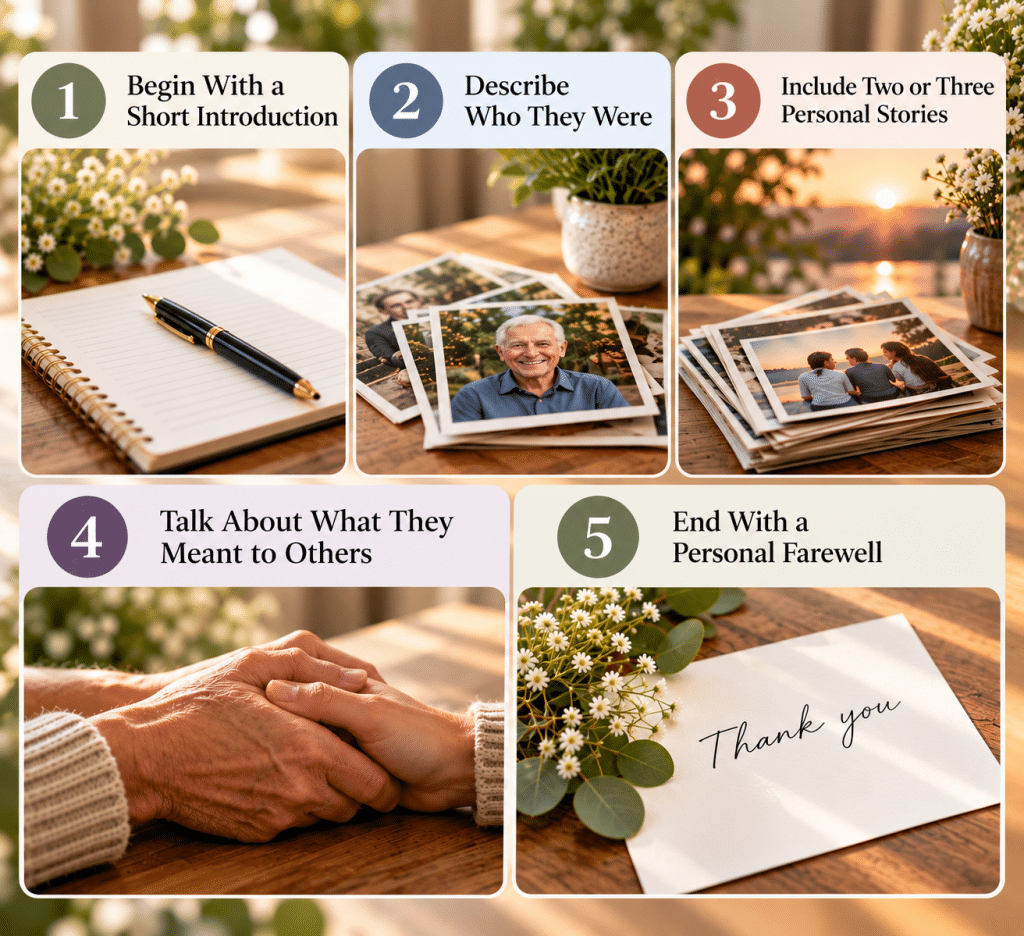
A simple structure can help you organise your memories and decide what to say. These five steps offer a starting point for writing a personal eulogy.
Begin With a Short Introduction
Introduce yourself and explain your relationship with the person. You may also thank family and friends for attending the service.
Example:
“I’m Sarah, Margaret’s daughter. Having you all here today means a great deal to our family as we share our memories of Mum.”
Describe Who They Were
Think about their personality, interests and everyday habits.
Perhaps your dad enjoyed preparing Sunday lunches, or your mum loved spending time in the garden. Mentioning these familiar habits can give listeners a clearer picture of what your loved one was like.
Share Two or Three Personal Memories
Remember how they behaved during ordinary family moments. Maybe they could turn a simple family dinner into a lively conversation or quietly lend a hand before anyone asked.
It might be the way they welcomed you home, a funny incident during a family meal or a quiet moment you spent together. Include enough detail for others to picture what happened and understand why you remember it.
Talk About What They Meant to Others
Think about the difference your loved one made in everyday life, both for you and for others. You may wish to share a lesson you learned from them, a time they stood by you or a moment when their words brought comfort. Use real memories to show what they meant to you.
End With a Personal Farewell
Close with a few words that reflect your relationship. You might express gratitude, share a final thought or simply say goodbye.
Example:
“Mum, I’ll always remember our Sunday conversations. Thank you for everything. We’ll miss you.”
You can adjust these steps to suit your memories and the time available. There is no need to give every section equal attention.
Families may also choose to personalise a funeral through music, photographs or other details that reflect their loved one’s life.
How to Start a Eulogy: 8 Opening Line Examples
The first few sentences can be the hardest to write. You might begin with a familiar habit, a shared experience or something the person often said.
Here are eight approaches you can adapt to your own memories.
1. A Thoughtful Reflection
“Margaret always noticed when someone needed help. She would arrive with a meal, stay for a chat and never expect anything in return.”
2. A Childhood Experience
“Every Saturday morning, Dad took us to the local markets. I remember walking beside him while he stopped to talk with almost everyone.”
3. A Familiar Habit
“Mum had a lovely habit of putting the kettle on whenever someone stopped by, making everyone feel welcome in her home.”
4. Remembering a Partner
“After thirty years together, I still find myself looking for David when something happens that I want to tell him.”
5. Remembering a Friend
“James never arrived at a gathering empty-handed. Sometimes he brought food, sometimes an unusual board game, and always a story.”
6. Acknowledging Difficult Emotions
“I’ve thought carefully about what to say today. There is so much I appreciate about Mum, and I’d like to share some of it.”
7. Beginning With Gentle Humour
“Dad loved talking about the weather. He could look outside at a perfectly clear sky and still find a reason to tell us what tomorrow might bring.”
8.Starting With a Personal Memory
“Nan kept a small collection of colourful pots on her balcony. Those quiet afternoons together have become some of my favourite memories.”
For your own opening, choose a small moment that captures something familiar about your loved one. It could be a shared routine, a conversation or something they often did that you still remember.
How to Gather Stories from Family and Friends
Talking with family members and close friends can help you remember moments you might otherwise overlook.
They may recall familiar habits, shared experiences or parts of your loved one’s life that you did not know about.
Consider contacting a few people who knew them well. You can begin with three simple questions:
- What is your favourite memory of them?
- Do you remember something they said or did that brought you comfort when you needed it?
- What small things did they regularly do that still bring them to mind?
Invite family members and friends who knew the person well to share their memories. Give people time to respond. Some may find it difficult to talk about their memories while grieving.
Once you have gathered their responses, choose stories that reflect the person’s character. Ask permission before sharing anything private or sensitive.
Writing a Eulogy for Mum, Dad, a Partner or a Friend
Your relationship with the person can help guide what you include. The following suggestions offer different starting points.
How to Write a Eulogy for Mum
Your mum’s life was more than her role in the family.
You might describe her interests, friendships, sense of humour or favourite activities. Think about the moments that showed her personality outside everyday responsibilities.
Example:
“Mum loved walking along the beach on Sundays. She often returned with a story about someone she’d met.”
How to Write a Eulogy for Dad
Think about the things that made your dad recognisable to family and friends.
You could mention his approach to work, the activities you enjoyed together or something he often said.
Example:
“Dad could repair almost anything. He kept every spare screw in an old biscuit tin, convinced it would come in handy.”
How to Write a Eulogy for a Partner
A tribute to your partner may include the routines, experiences and conversations that shaped your life together.
Choose memories you feel comfortable sharing publicly. Even a small everyday detail can communicate the closeness of your relationship.
Example:
“David made two cups of tea each morning. He always remembered exactly how I liked mine, even after thirty years.”
How to Write a Eulogy for a Friend
A friend’s eulogy might describe how your friendship began, the experiences you shared or the ways you supported each other.
You could also recall a familiar habit that other friends would recognise.
Example:
“James called every birthday without fail. No matter how busy life became, he always found time for a long conversation.”
What to Leave Out of a Eulogy
Choosing what to include is important, but deciding what to leave out also deserves thought.
Some memories may be meaningful to you but uncomfortable for others to hear during a funeral or memorial service.
Consider avoiding the following:
- Past disagreements: Old arguments, family tensions or unresolved issues may cause unnecessary distress.
- Private jokes without context: Humour can bring warmth but explain the story if only a few people would understand it.
- Long lists of life events: A detailed timeline of schools, jobs and milestones can make a speech difficult to follow.
- Sensitive information: Avoid sharing medical details, personal struggles or private family matters without appropriate permission.
You can acknowledge someone’s life with honesty while respecting the privacy of others.
If you’re uncertain about a particular story, discuss it with a close family member before including it.
Delivering a Eulogy: Nerves, Tears and Backups
Speaking in front of family and friends can feel overwhelming when you are grieving.
You may feel nervous, lose your place or become emotional while reading. These are common experiences, and you do not need to deliver your speech perfectly.
A few preparations can make the experience more manageable:
- Keep a printed copy: Use large, easy-to-read text with clear spaces between paragraphs. Mark places where you may want to pause.
- Practise difficult sentences: Read the speech aloud to identify words or passages that feel awkward. Adjust them until they sound natural.
- Allow yourself to pause: If your voice breaks or you begin to cry, stop for a moment. Continue when you feel ready.
- Arrange a backup reader: Ask someone you trust to keep a copy and be prepared to step in if needed.
Having someone available to help can make speaking feel less daunting.
Two Eulogy Examples You Can Adapt
The following examples show how personal memories, character and a farewell can come together in a speech.
The first is a longer traditional tribute. The second is a shorter example with gentle humour.
Example 1: A Traditional Eulogy for a grandfather
“Thank you all for being here to remember my grandfather, Robert.
Grandad was a kind, patient man who loved gardening and spending time with family.
I remember helping him plant tomatoes as a child. Even when I made mistakes, he calmly showed me what to do.
He was always willing to help others, whether fixing a neighbour’s gate or sharing vegetables from his garden.
Grandad taught me patience, kindness and the importance of making time for people.
Thank you for everything, Grandad. We’ll miss you.”
Example 2: A Lighter Celebration-of-Life Eulogy for an Aunt
“Aunt Linda was rarely on time, but she always arrived with a smile.
She loved music, family gatherings and making everyone laugh.
One Christmas, she forgot to turn on the oven. Instead of worrying, she played music and brought out the biscuits. Dinner was late, but we had a wonderful afternoon.
Linda taught us to enjoy life’s unexpected moments.
We’ll miss her laughter and the happiness she brought to our family.”
Both examples follow the five-part structure: introduction, character, personal memory, lasting influence and farewell. They are brief samples that you can expand with your own memories.
Eulogy Writing Checklist
Before finalising your speech, check that you have:
- Introduced yourself and explained your relationship.
- Described the person’s character.
- Included one or two meaningful memories.
- Explained why those memories matter.
- Finished with a personal farewell.
- Read the speech aloud and checked its length.
You may also wish to arrange a backup reader if speaking feels difficult.
Can You Give a Eulogy at a Memorial Service?
Yes. A eulogy can be delivered at a funeral, memorial service or another gathering held to remember someone.
Some families choose to hold a memorial separately from the cremation. This allows relatives and friends to gather, share memories, and read personal tributes at another time.
For those considering this option, planning a meaningful memorial after an unattended cremation offers further information on ways to remember a loved one.
Frequently Asked Questions About Writing a Eulogy
1.Can two people deliver a eulogy together?
Yes. Two people can share a eulogy by taking turns or speaking about different parts of the person’s life.
Agree on who will read each section beforehand so the speech flows smoothly.
2.Is humour appropriate in a eulogy?
Yes. A gentle joke or light-hearted memory can help reflect someone’s personality.
Choose humour that feels respectful and consider how family members and friends may respond.
3.What if I become too emotional to finish my eulogy?
You can ask someone you trust to continue reading. It may help to agree on this arrangement before the service so you know support is available.
4.Do I need to memorise my eulogy?
No. You can read your eulogy from a printed copy or use brief notes if you prefer. Choose whichever option helps you feel more comfortable when speaking.
Final Thoughts: Your Words Do Not Need to Be Perfect
Writing a eulogy is a personal experience. There is no single way to remember someone, and every relationship brings different memories.
Choose the stories and words that feel right to you. Your speech can be simple, thoughtful and true to the person you are remembering.
For families preparing a funeral or memorial service in Sydney, Majestic Funerals provides information about funeral arrangements and available options.